
What Is a Facsimile? How a Faithful Copy of a Work Is Made
A facsimile is not a photograph of a work. We look at the process, from permissions and colour management to paper and binding.
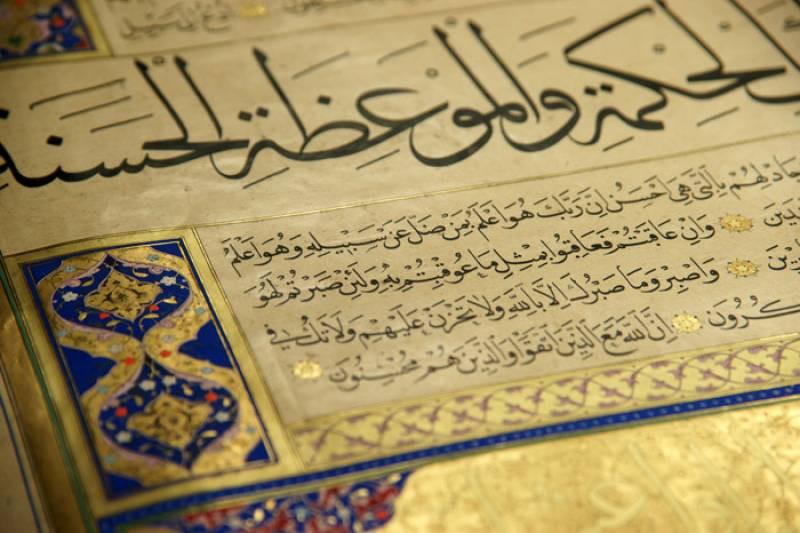
A facsimile of a manuscript or a calligraphic panel is not a photograph of it. A facsimile aims to match the original as closely as possible — in size, in the tone of the paper, in the depth of the ink, in the texture of the binding — so that holding it gives the same impression as holding the original. This is why preparing one often takes years.
Permission first, then research
The work begins with the library or museum that holds the original. Manuscripts usually cannot leave the institution, so photography takes place on site and under conditions the institution sets. In parallel, an academic study covers the work's provenance, date, calligrapher and any earlier restoration. The study booklets that accompany a facsimile come out of this stage.
Photography and colour management
Manuscripts are recorded on contactless rigs, in book cradles that do not strain the spine, under lighting that gives off no heat. A colour reference card sits in frame for every page; without it, pages would drift away from one another at the printing stage.
The task here is fidelity, not beautification. The yellowing of the paper, the ink that has faded in places, the uneven sheen of the gold in the illumination — these are the work's own history. In a facsimile they are preserved rather than cleaned away.
Paper, printing and binding
Paper is the single decision that most determines how close a facsimile comes to its original. Weight, tone, opacity and surface texture are chosen against the original, and for some projects paper is produced specifically for that one work. Acid-free stock is preferred for longevity.
Once printing is complete the sheets are folded, sewn and bound. Leather covers, the central medallion and cornerpiece decoration, the envelope flap — each is reproduced with reference to the original binding. This stage is largely handwork, and it is the slowest part of the process.
Limited numbers, certificate and serial number
Facsimiles are produced in limited numbers. Every copy carries its own serial number and is documented with a certificate. When the print run is complete the project closes; the same work is not reprinted in the same form. Knowing which edition a copy belongs to, and where it falls in the run, matters for exactly this reason.
A facsimile is not a new edition
Publications that reset a manuscript's text in modern typography have their own value, but they are not facsimiles. A facsimile is not measured by whether it carries the text across, but by whether it carries the object across: page layout, number of lines, margins, the placement of the illumination and the proportions of the binding all follow the original. The difference is the difference between reading a work and seeing it.