
Storing a Collection Properly: Humidity, Light and Handling
Paper and leather are slow materials; damage shows up over years. Almost every useful precaution is simple and costs nothing.
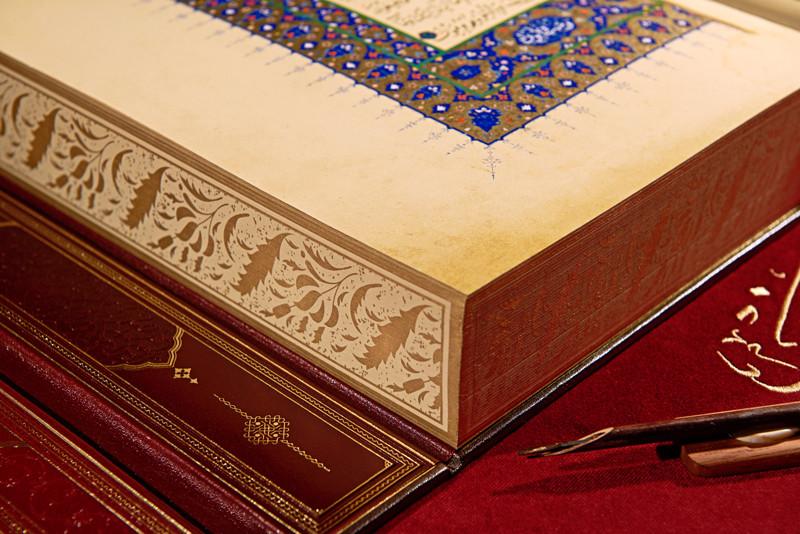
What decides the lifespan of a collectible volume or a framed work is, more often than not, how you store it. Paper and leather are slow materials; the damage they take shows up over years rather than days. The good news is that almost every useful precaution is simple and costs nothing.
Humidity and temperature
The ideal range for paper is roughly 45–55% relative humidity at 18–22 °C. The point is not to hit those figures exactly but to avoid sudden swings: paper expands as it takes up moisture and contracts as it gives it off, and that movement strains the binding. A spot facing a radiator in winter, sitting in front of an air conditioner in summer, or on a wall shared with a bathroom or kitchen is unsuitable for this reason.
Persistently high humidity is the main cause of mould. Basements and attics, where temperature and humidity move most, should be the last places you consider.
Light
Light damage is cumulative and irreversible: ink fades, paper yellows, leather dries out. A position out of direct sunlight is the most basic protection there is. Use UV-filtered glazing for framed works, and get into the habit of resting a displayed piece from time to time.
On the shelf
Large and heavy volumes should be stored flat; standing upright, their own weight strains the spine and the sewing. If they must be stacked, keep it to two or three volumes with the largest at the bottom.
Ordinary-sized books can stand upright, but should be neither packed tight against their neighbours nor loose enough to lean. Leave a few centimetres between the shelf and the wall behind it for air to move.
If a work came in its own box or slipcase, that is the best protection available: it reduces dust, light and humidity swings at once.
Handling
Contrary to common belief, cotton gloves are not recommended for paper. Gloves dull your sense of touch and raise the risk of tearing as pages slip, and their fibres can catch on the surface. Clean, dry hands with no hand cream are safer for paper. Gloves are genuinely needed for photographs, metal and polished surfaces.
Do not open a thick volume fully; an angle beyond 120 degrees puts lasting strain on the spine. Use a book cradle, or a couple of folded cushions, where you can. Turn pages slowly, from the edge, with two fingers, and avoid pressing on illuminated or gilded areas.
Keep water, coffee and pens away from the work; use pencil only.
Regular checks
Looking over the shelves once or twice a year is enough. Remove dust with a soft brush, working outwards towards the edges rather than from the spine across the pages. Small brown spots, yellowish rings or dust-like residue on paper can signal damp or insects; caught early, both are easy to deal with.
In short
- Stable humidity and temperature; away from radiators, air conditioners and exterior walls
- No direct sunlight; UV-filtered glazing in frames
- Heavy volumes flat, ordinary sizes upright without being squeezed
- In its own box, if it has one
- Clean dry hands, never fully opened, pages turned from the edge
- A look over the shelves once or twice a year